BIOGRAPHY
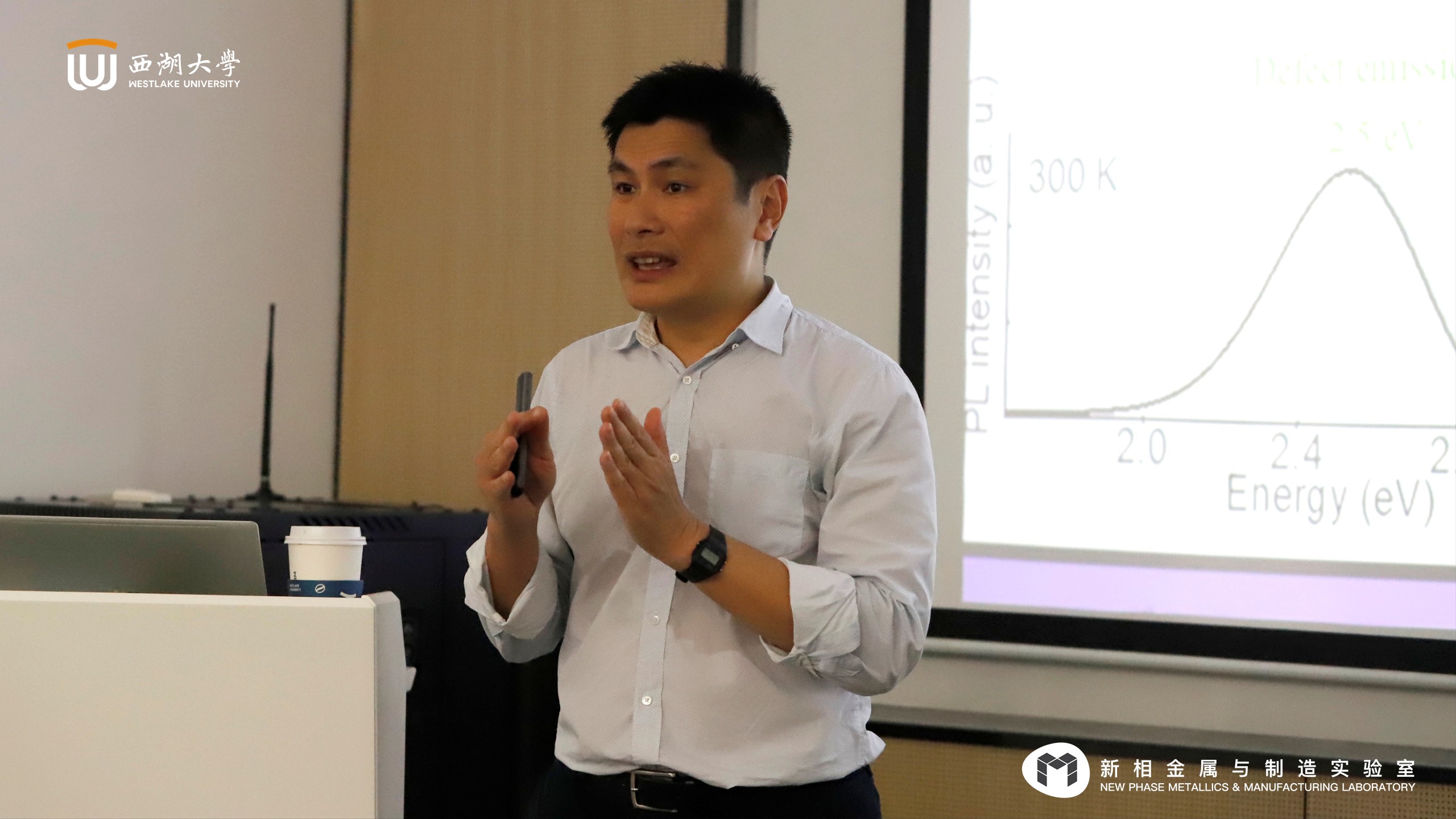
Cuong Ton-That is an Associate Professor in the School of Mathematical and Physical Sciences, University of Technology Sydney (UTS, Australia). He earned a BSc in Physics (Honours, University Medal) from UTS and his PhD in the field of surface science from the Robert Gordon University (UK) in 2000. Prior to his tenure at UTS, he worked as a postdoctoral researcher in the Nanoscience Centre, University of Cambridge from 2000 to 2003. His research focusses on the advancement of oxide materials and nanostructures tailored for optoelectronic and power electronic applications. He has specialised expertise in the growth and characterisation of functional nanostructured oxides, complemented by extensive experience in cathodoluminescence microanalysis, synchrotron-based X-ray techniques and electron microscopy. He has established strong research links with key industry collaborators such as Nanovation and 3D-Oxides.
ABSTRACT
Oxide semiconductors are an important class of materials for emerging energy and optoelectronic technologies because their properties can be tuned through composition, defects and surface chemistry. This seminar will present recent work on oxide semiconductor nanostructures for solar water splitting and deep-ultraviolet photodetection. The first part will discuss defect-engineered WO3, ZnO and BiVO4 photoanodes for solar hydrogen production. By controlling surface defects, dopant incorporation and catalytic layers, these materials can be designed to improve charge separation, reduce recombination and enhance solar water oxidation. The second part will focus on β-Ga2O3 and AlGaO solar-blind ultraviolet photodetectors for satellite applications. These ultrawide-bandgap oxide devices offer strong deep-UV selectivity and promising radiation tolerance. Luminescence and irradiation studies provide insight into how defects influence optical response, device stability and performance in harsh space environments. The seminar will highlight how defect chemistry and surface engineering provide powerful tools for tailoring oxide semiconductor nanostructures for clean energy and advanced optoelectronic applications.