BIOGRAPHY
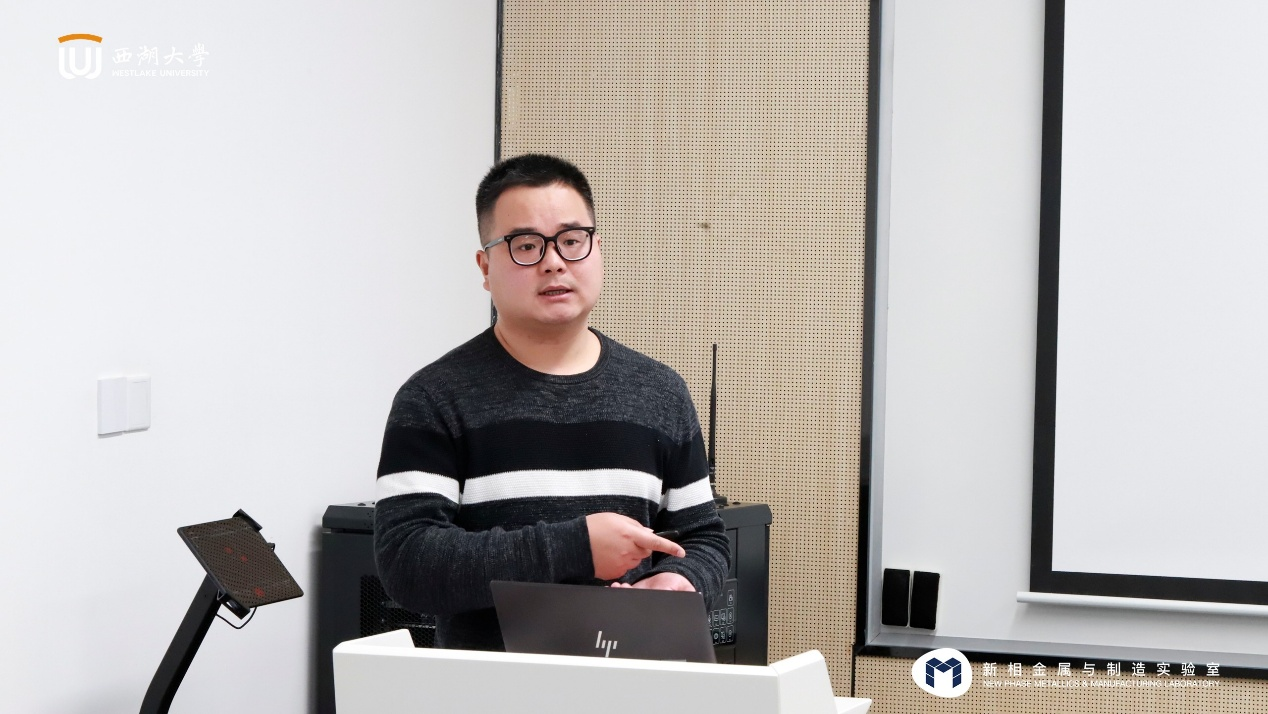
Junma Tang, a professor at the School of Chemistry, Xi'an Jiaotong University, is a recipient of Science Fund Program for Distinguished Young Scholars (Overseas) and classified as a Category A young top-tier talent. He earned his Ph.D. from the University of New South Wales (UNSW) and subsequently conducted postdoctoral research at UNSW and the University of Sydney (USYD). With a multidisciplinary background in organic chemistry, catalytic chemistry, materials science, and nanotechnology, his current research focuses on the dynamic catalytic applications of liquid metals. To date, he has authored over 10 representative research papers as the first author and/or corresponding author in prestigious international journals such as Science, Nature Nanotechnology, Nature Communications(accepted), Advanced Materials, and ACS Nano.
ABSTRACT
In solid-state catalytic materials, active site atoms are precisely arranged to facilitate specific reactions. However, these catalysts face inherent challenges, including limited surface area, difficulties in achieving single-atom accessibility, susceptibility to fouling and deactivation by solid by-products, challenges in selectivity control, a tendency toward side reactions, and mass transfer limitations caused by reactant diffusion into solid structures. Addressing these limitations requires catalytic materials with atomic flexibility and self-regenerating surfaces to mitigate deactivation. Liquid metals offer a promising alternative due to their unique properties, including atomic dispersion of dissolved elements, ease of alloy preparation, high-entropy surfaces, atomic adaptability, and resistance to coking. These features fundamentally differentiate them from solid-state catalysts with rigid atomic structures. Dr. Tang’s research focuses on harnessing the dynamic catalytic potential of liquid metals, leveraging the liquid nature of metallic atoms. By dissolving multiple metallic species, the dynamic configurations of liquid atoms exhibit intelligent catalytic behaviors, characterized by adaptability and transient alignments with reactants. Furthermore, the tunable nature of liquid atomic structures, enabled by selecting alternative metallic solvents, expands the applications of liquid metal catalysis.